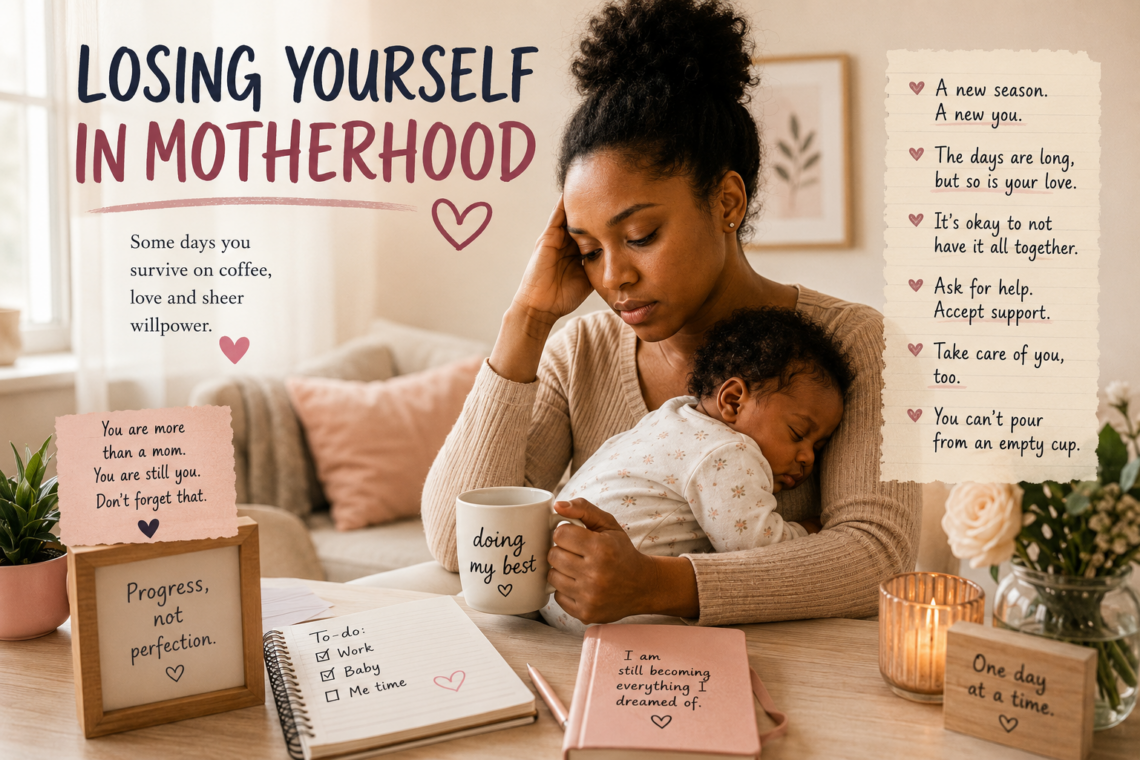
Losing Yourself in Motherhood
A lot of women go through this silently without even realizing it is happening. You become a mother, go on maternity leave for three months, and during that time the world feels slower, softer, and centered around your baby. Then suddenly the leave ends, and reality hits — you have to go back to work and leave your baby at home.
The first day back at work can feel exciting. You have missed adult conversations, office gossip, dressing up, and interacting with people outside the world of diapers and feeding schedules. For a moment, you feel like yourself again. But then your colleagues start asking about the baby, your body reminds you that you are still breastfeeding, and suddenly your mind drifts back home.
You start missing your baby the moment the breastmilk begins to leak and you have to rush to pump just to maintain your supply. Your thoughts are no longer fully your own. Every decision now revolves around another human being. Financial goals change overnight. It is no longer about buying things you want or planning personal adventures. Now it is diapers, milk, doctor visits, and eventually school fees.
Motherhood changes everything.
I often think single mothers carry an even heavier burden because many of them do it without emotional or financial support. The pressure of balancing work, childcare, bills, and emotional exhaustion alone can be overwhelming.
This is where many women slowly begin to lose themselves in motherhood.
You no longer have the freedom to spontaneously meet friends after work because you need to rush home to relieve the nanny, check on the baby, cook, clean, and prepare for the next day. Your world becomes a cycle of responsibility. Somewhere between trying to be a good mother, a good employee, a good partner, and a functioning adult, you forget to ask yourself one important question:
What about me?
One thing I have realized is that support can completely change a mother’s experience. If someone can afford to hire two nannies — one focused on childcare and another handling house chores — it can significantly reduce stress. It allows the mother to focus better at work, rest when needed, and even have moments to reconnect with herself or her friends. It creates stability at home and peace of mind.
Unfortunately, many families cannot afford that luxury.
For most mothers, having only one nanny means carrying constant anxiety. The moment the nanny threatens to leave or suddenly quits, your entire routine collapses. You have to miss work, search for replacements, reorganize your life, and hope your employer understands. In Kenya today, nanny turnover has become very high because social media and agencies have made it easier for domestic workers to quickly find new opportunities. As a result, many mothers feel like they are constantly walking on eggshells trying to keep their childcare arrangements stable.
Honestly, I wish more companies in Kenya would provide workplace childcare services. It would reduce absenteeism, improve productivity, and most importantly support working mothers who are trying their best to balance career and family life.
Then there is the exhaustion that comes with having a young baby.
Newborns wake up several times during the night to breastfeed, and this can continue for months. Sleep deprivation becomes normal. Fatigue, anxiety, emotional stress, and mental burnout slowly build up. Yet many mothers are still expected to wake up the next morning and function perfectly at work.
If you are lucky enough to work in a supportive environment, people may show understanding. But toxic workplaces can make motherhood even harder. Some employers ignore the physical and emotional toll that motherhood takes and continue piling pressure onto women with unrealistic deadlines and expectations.
I remember after having my first child, I was passed over for a promotion simply because I had taken four months off after giving birth. None of the hard work I had done before seemed to matter anymore. It felt as though maternity leave was viewed as being paid for “free,” instead of being recognized as a necessary and demanding phase of life.
The cycle continues year after year until the children finally start school. And for mothers who choose to have another child, the process often begins all over again.
Some women survive this season because they have strong support systems — supportive partners, involved family members, understanding employers, or financial stability. But women without support can completely lose themselves in motherhood. Some fall into depression. Others become emotionally disconnected from who they once were.
Ironically, it is often when the children grow older and start school that many women finally begin reconnecting with themselves. They suddenly have moments of silence, time to think, and the opportunity to rediscover their ambitions, passions, and identity outside motherhood.
This may also explain why many women turn to business or entrepreneurship. Being your own boss offers flexibility that traditional employment often cannot provide. You can adjust your schedule when your child is sick, attend school activities without guilt, work around your family’s needs, and still pursue your goals.
Motherhood is beautiful, but it is also consuming.
And while many mothers willingly give everything to their children, I hope that in the coming years society and workplaces will become more supportive so women do not have to choose between being present mothers and fulfilled individuals.
Because mothers deserve support too.
Read more:
https://lifestyle.co.ke/2025/07/30/the-evolving-role-of-a-mother-in-modern-society/